

Industrial Real Estate 2025: CRE Investment Trends Driving Nearshoring, Data Centers & Logistics Boom
Industrial Real Estate 2025: CRE Investment Trends Driving Nearshoring, Data Centers & Logistics Boom
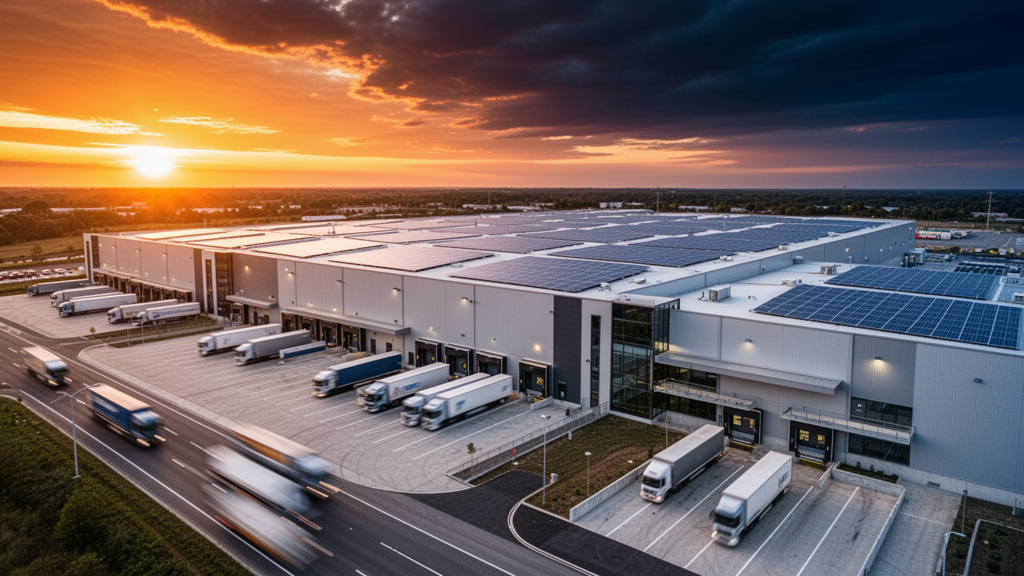
Picture this: a colossal warehouse rising from the sun-baked flats near a bustling port, its doors swallowing fleets of electric trucks while drones buzz overhead like metallic bees. Inside, AI-orchestrated robots dance through aisles stacked with tomorrow's deliveries. This isn't science fiction—it's the frontline of Industrial Real Estate 2025, where seismic shifts in global trade, digital hunger, and consumer habits are fueling a gold rush for savvy CRE investors.
As office towers gather dust and retail strips fade into memory, capital is pivoting hard toward industrial assets. Why now? E-commerce's relentless march, nearshoring's supply chain reset, and a data center frenzy sparked by AI are colliding to supercharge Logistics Property Demand. For commercial real estate investors, institutional allocators, and brokers, understanding these CRE Investment Trends isn't optional—it's the blueprint for outsized returns in 2025.
Macro Trends Propelling the Industrial Surge
The industrial sector's renaissance stems from three unstoppable forces, each rewriting the rules of Commercial Real Estate Strategy.
E-Commerce Evolution: The Last-Mile Imperative
E-commerce didn't peak during the pandemic—it accelerated into overdrive. Consumers now demand same-day delivery as a baseline, turning urban edges and suburban sprawl into prime real estate. Logistics facilities aren't just warehouses anymore; they're high-tech fulfillment nerve centers equipped for micro-fulfillment and automated sorting. This evolution spikes demand for infill sites—properties within striking distance of dense populations—where rents have soared 20-30% in key markets over the past year alone.
Nearshoring CRE: Reshoring Supply Chains Closer to Home
Nearshoring CRE is the geopolitical game-changer. Tariffs, pandemics, and Red Sea disruptions have convinced manufacturers to pull production nearer to end markets. Mexico's maquiladoras are booming, drawing U.S. firms to border states like Texas and Arizona for just-in-time assembly. In the U.S., the Sun Belt—from Georgia to Southern California—is magnetizing investments in Logistics Property Demand, with multimodal facilities linking highways, rail, and ports becoming the holy grail. Expect vacancy rates to plummet below 3% in these hubs as occupiers lock in long-term leases.
Data Center Real Estate: AI's Power-Hungry Frontier
The AI revolution is devouring electricity like never before, thrusting Data Center Real Estate into the spotlight. Hyperscalers like those powering cloud services need vast, power-ready sites—think 100+ MW capacities near cheap, renewable energy grids. Virginia's "Data Center Alley," Texas plains, and emerging spots in Ohio are heating up. These aren't your grandpa's server farms; modern facilities demand cooling tech, fiber optics, and seismic resilience, commanding cap rates under 5% and lease terms stretching a decade.
Where Capital is Flowing: CRE Investment Trends for 2025
Institutional money is chasing yield in predictable patterns. Forget scattered bets—smart allocators are zeroing in on subsectors primed for scarcity.
Multimodal Hubs: The Interconnected Powerhouses
Facilities blending truck, rail, air, and sea access are the new unicorns. Inland ports in Dallas-Fort Worth or Chicago's vast rail yards exemplify this, slashing transit times and emissions. Investors take note: these assets yield rental growth north of 5% annually, fueled by importers dodging ocean freight volatility.
Cold Storage: E-Commerce's Chilled Frontier
Grocery delivery and pharma logistics have ignited a cold storage renaissance. Sites with blast freezers and energy-efficient refrigeration near urban centers are vanishingly rare, pushing rents skyward. Picture a 500,000 sq ft behemoth in Riverside, CA, humming 24/7 for meal-kit giants— that's the archetype drawing pension funds and REITs.
Power-Ready Sites: Data Centers' Secret Weapon
With grids strained, "shovel-ready" parcels boasting substation proximity or solar adjacency command premiums. Secondary markets like Reno or Phoenix are surging as hyperscalers scout beyond coastal constraints. Yields here? Compression to 4-4.5% as demand outstrips supply threefold.
Commercial Real Estate Strategy: Actionable Plays for Professionals
- Scout Infill and Edge Cities: Prioritize last-mile logistics within 200 miles of metro cores. Use GIS mapping to unearth under-the-radar parcels before brokers flood in.
- Partner with Tech Titans: Align with data center developers via joint ventures; their long horizons stabilize portfolios amid rate flux.
- Embrace Sustainability: Retrofit for EV charging, solar arrays, and net-zero ops—ESG mandates from LPs are non-negotiable, unlocking cheaper debt.
- Diversify Across Submarkets: Blend nearshoring plays in the Southwest with Midwest data hubs to hedge regional risks.
- Leverage Debt Wisely: Lock in floating-to-fixed rates now; industrial's velocity supports aggressive leverage without distress.
Brokers, sharpen your pitch: Emphasize tenant credit quality and lease-backlog depth. Allocators, stress-test for 6% vacancy scenarios—these assets weather storms better than any sector.
The Road Ahead: Seizing Industrial Real Estate 2025
Industrial real estate isn't just resilient—it's the vanguard of CRE's future. As nearshoring solidifies, e-commerce permeates daily life, and AI's thirst for compute escalates, Industrial Real Estate 2025 promises a boom few sectors can match. The question isn't if capital will flow here, but whether you've positioned to capture it.
Heed the signals: from robot-packed distribution centers to gigawatt data halls. For investors and brokers who act decisively, 2025 beckons not as a trend, but as a transformation. The warehouses are waiting—will you claim your stake?